Tomatoes
How to Grow and Care for Black Krim Tomato
Black Krim trades disease resistance and tidy fruit for flavour. Here is how to grow it, and how to tell when a tomato that never turns red is actually ripe.
The Garden Magic Hub
- Zone
- 3–11 (grown as an annual)
- Light
- Full sun
- Water
- Moderate
- Level
- Intermediate
- Season
- Summer
On this page
Black Krim is the heirloom people grow once and then keep growing — a beefsteak from Crimea with dark maroon shoulders and a smoky, almost savoury flavour that no hybrid quite matches.
It is also a genuinely harder plant to grow well than a modern variety, and the reasons are worth understanding before you commit a season to it.
What you are trading
Heirlooms are open-pollinated varieties selected long before modern breeding programmes, and Illinois Extension is straightforward that they are trickier than hybrids for two structural reasons.
Less disease resistance. Modern hybrids carry bred-in resistance to verticillium, fusarium, nematodes and more — the letters on the seed packet. Heirlooms generally do not. Black Krim will get what is going around.
More cracking. Illinois notes that older heirloom varieties are especially prone to fruit cracking, because how much a fruit cracks depends on how stretchy and strong its skin is, and modern varieties have been bred for skins that resist it.
You are buying flavour with disease resistance and cosmetic quality. For most home growers that is a good trade — you are not shipping the fruit anywhere — but it means planning around both.
Growing it
Days to maturity: about 80. That is on the long side, so start seed indoors 6 to 8 weeks before your last frost and be realistic if you have a short season.
Indeterminate, so it grows and fruits until frost, and trellising is recommended. Put strong support in at planting — Black Krim gets tall and carries heavy fruit.
Everything else follows standard beefsteak culture, which is covered in more detail in the beefsteak tomatoes article: full sun, prune suckers every five to seven days early on, moderate nitrogen, and rotate out of the nightshade family for three years.
Two things matter more than usual here, because of the disease and cracking issues:
Space generously and keep airflow moving. With no bred-in disease resistance, air circulation is your main defence against foliar disease. Give it the wide end of the spacing range and prune to one or two stems.
Water consistently and mulch heavily. Cracking is caused by moisture swings — a downpour after a dry spell makes the inside swell faster than the skin can stretch. Mulch buffers that better than any watering schedule, and picking fruit that is nearly ripe ahead of a forecast storm is the only real defence against rain you cannot control.
Knowing when it is ripe
This is the practical difficulty specific to dark tomatoes, and it catches everyone the first year.
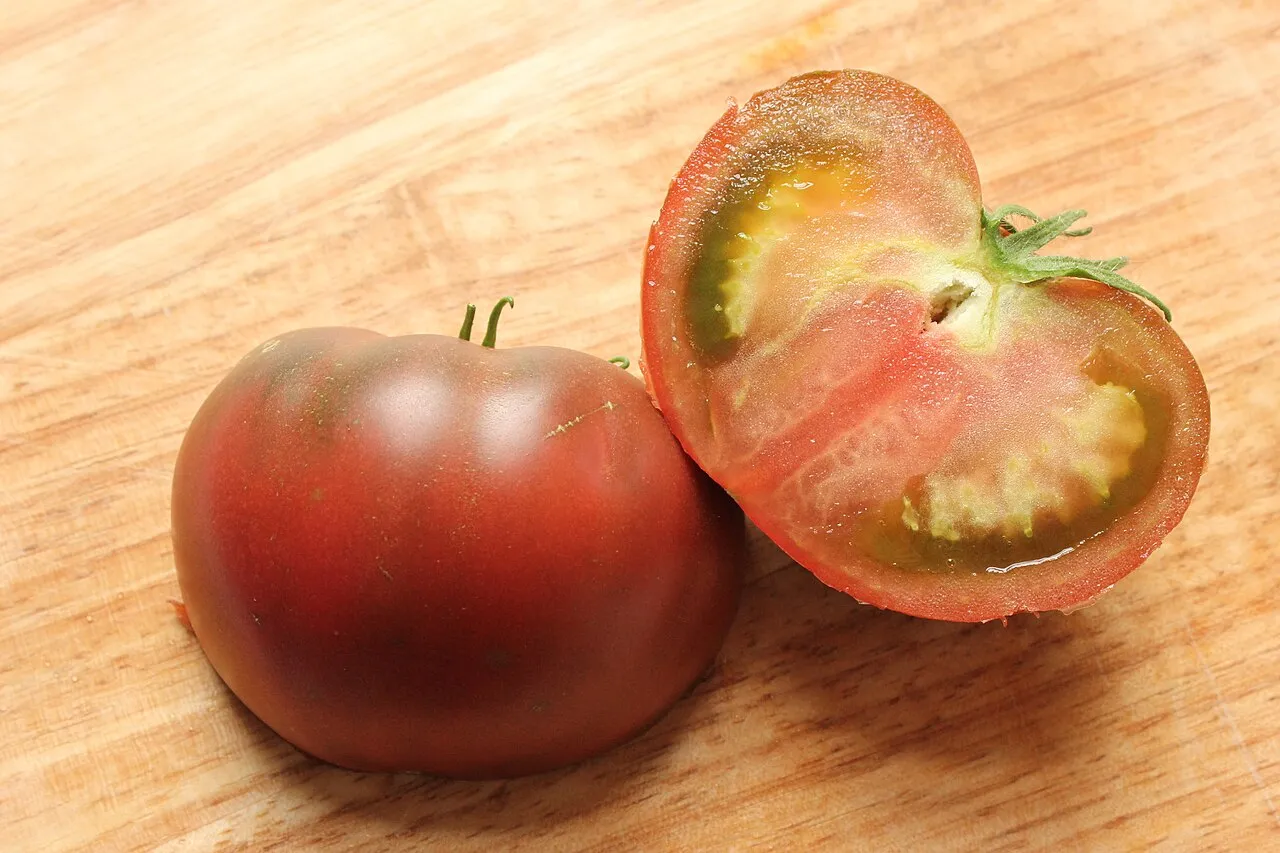
Black Krim never turns red. A ripe fruit is a dull brick-red with shoulders that stay dark green, brown or almost black. If you wait for the even red of a supermarket tomato, you will leave it on the vine until it splits or rots.
Use touch instead of colour. A ripe Black Krim gives slightly to gentle pressure, the way a ripe peach does, and the shoulders will have darkened rather than lightened. When in doubt, pick one and cut it: dark heirlooms finish ripening perfectly well on a counter.
Two things that look like problems and are not
Green gel around the seeds. Visible in the cut fruit above. It is characteristic of the dark heirlooms and has nothing to do with unripeness.
Green or yellow shoulders. Common on heirlooms generally. Illinois notes these areas can be easily cut off and the fruit is safe to eat, though sometimes bland. Heavy shouldering is worse in high heat and strong sun, so it varies year to year.
Saving seed
Black Krim is open-pollinated, so unlike a hybrid it comes true from saved seed. Ferment the seed in a little water for a few days to remove the gel coat, rinse, and dry thoroughly.
That is part of the appeal of heirlooms — you can keep the variety going yourself indefinitely.
The short version
An 80-day indeterminate beefsteak with outstanding flavour and none of the modern disease resistance. Stake it hard, space it wide for airflow, mulch deeply and water steadily to limit cracking. Judge ripeness by feel and by darkening shoulders, never by turning red. Then save the seed.
- black krim
- heirloom tomatoes
- fruit cracking
- indeterminate
- ripeness