Tomatoes
How to Grow and Care for Beefsteak Tomatoes
Beefsteaks need support, pruning and above all steady water — they are the type most prone to cracking. Here is how to grow the big ones well.
The Garden Magic Hub
- Zone
- 3–11 (grown as an annual)
- Light
- Full sun
- Water
- Moderate
- Level
- Intermediate
- Season
- Summer
On this page
Beefsteaks are the tomatoes people grow tomatoes for — the big, dense, sandwich-slice fruit that no supermarket sells well. They are also the most demanding type in the garden, and they fail in a particular way that smaller tomatoes mostly do not.
What makes a beefsteak a beefsteak
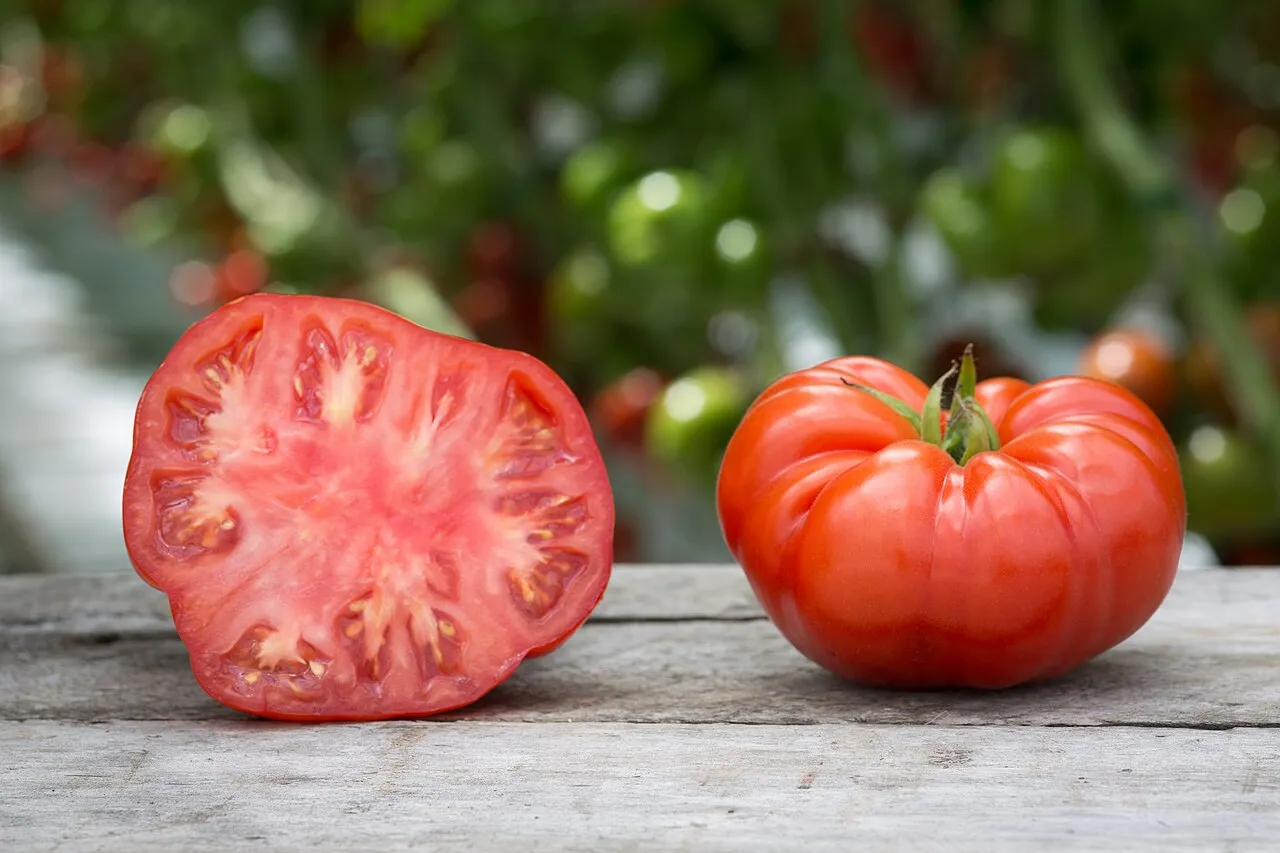
Large fruit with dense flesh and many small seed cavities rather than a few large ones. Missouri Extension describes them as commonly sliced and eaten fresh, very juicy, and the classic tomato-sandwich type.
That structure is why they slice cleanly instead of collapsing — and, as below, why they crack.
They are almost all indeterminate, which decides everything
Beefsteak varieties are overwhelmingly indeterminate: they keep growing and setting fruit until frost rather than ripening one concentrated crop.
Two consequences follow, and both are non-optional:
They need support. Indeterminate plants require staking, caging or trellising. A beefsteak plant carrying one-pound fruit will pull down an undersized cage — use tall stakes or heavy-gauge cages, and install them at planting rather than trying to wrestle a sprawling plant into one in July.
They benefit from pruning. Missouri Extension notes large-vine varieties benefit from removing some side shoots — “suckers” — or from topping, to stop plants becoming too bushy and tall.
Pruning suckers
A sucker is the shoot that grows in the crotch between a leaf and the main stem. Left alone each one becomes a full stem with its own leaves and fruit.
Iowa State Extension gives the cadence: remove suckers every five to seven days early in the growth of the plant. Small suckers pinch off between finger and thumb; large ones need pruners and leave a wound.
For beefsteaks specifically, pruning to one or two main stems concentrates the plant’s resources into fewer, larger fruit, which is usually the point of growing them. It also opens the canopy, which speeds drying and reduces foliar disease.
Do not strip leaves off wholesale. The foliage shades the fruit, and exposed tomatoes get sunscald.
Cracking, which is the beefsteak problem
Missouri Extension is specific that fruit cracking is most common on the large, beefsteak-type tomatoes.
The cause is not a disease. It is wide fluctuation in soil moisture — heavy rain or a deep watering after a long dry spell causes rapid water uptake, the inside of the fruit swells faster than the skin can stretch, and the skin splits.
You see it two ways: concentric rings around the shoulders, or radial splits running out from the stem.
The fix is entirely about consistency:
- Water regularly rather than heavily and occasionally. Steady is more important than plentiful.
- Mulch. Two to three inches of mulch buffers soil moisture more effectively than any watering schedule, especially against the rain you cannot control.
- Pick ripening fruit before a forecast downpour. Tomatoes near full colour will finish ripening indoors, and this is the only defence against a thunderstorm after a dry week.
Cracked fruit is still edible if you use it promptly — the split is an entry point for rot, not a toxin.
Timing and patience
Once fruit set has occurred, Missouri Extension gives 45 to 55 days for the fruit to develop and ripen fully, with catalogue maturity figures typically running from 65 days to over 79 depending on cultivar.
Beefsteaks sit at the long end of that range. In a short-season garden, that is the real constraint — start seed indoors early, and be realistic about whether an 85-day variety will ripen before your first frost.
The rest of the culture
Full sun, well-drained soil, consistent moisture, and moderate nitrogen — over-feeding gives you a large leafy plant with little fruit.
Three problems come up often enough on tomatoes generally that they have their own pages here:
- Blossom end rot — the sunken dark patch on the fruit bottom, and another moisture-consistency problem rather than a calcium shortage.
- Flowers but no fruit — usually temperature.
- Curling leaves — often harmless, sometimes not.
Rotate out of the nightshade family — tomatoes, peppers, eggplant, potatoes — for three years where you can.
The short version
Buy strong support and install it at planting. Prune suckers every five to seven days early on, to one or two stems. Mulch heavily and water steadily, because cracking is a moisture-swing problem and beefsteaks are the worst affected. Then allow 45 to 55 days from set to ripe, and pick before the storm.
- beefsteak tomatoes
- indeterminate
- pruning suckers
- fruit cracking
- staking