Perennials
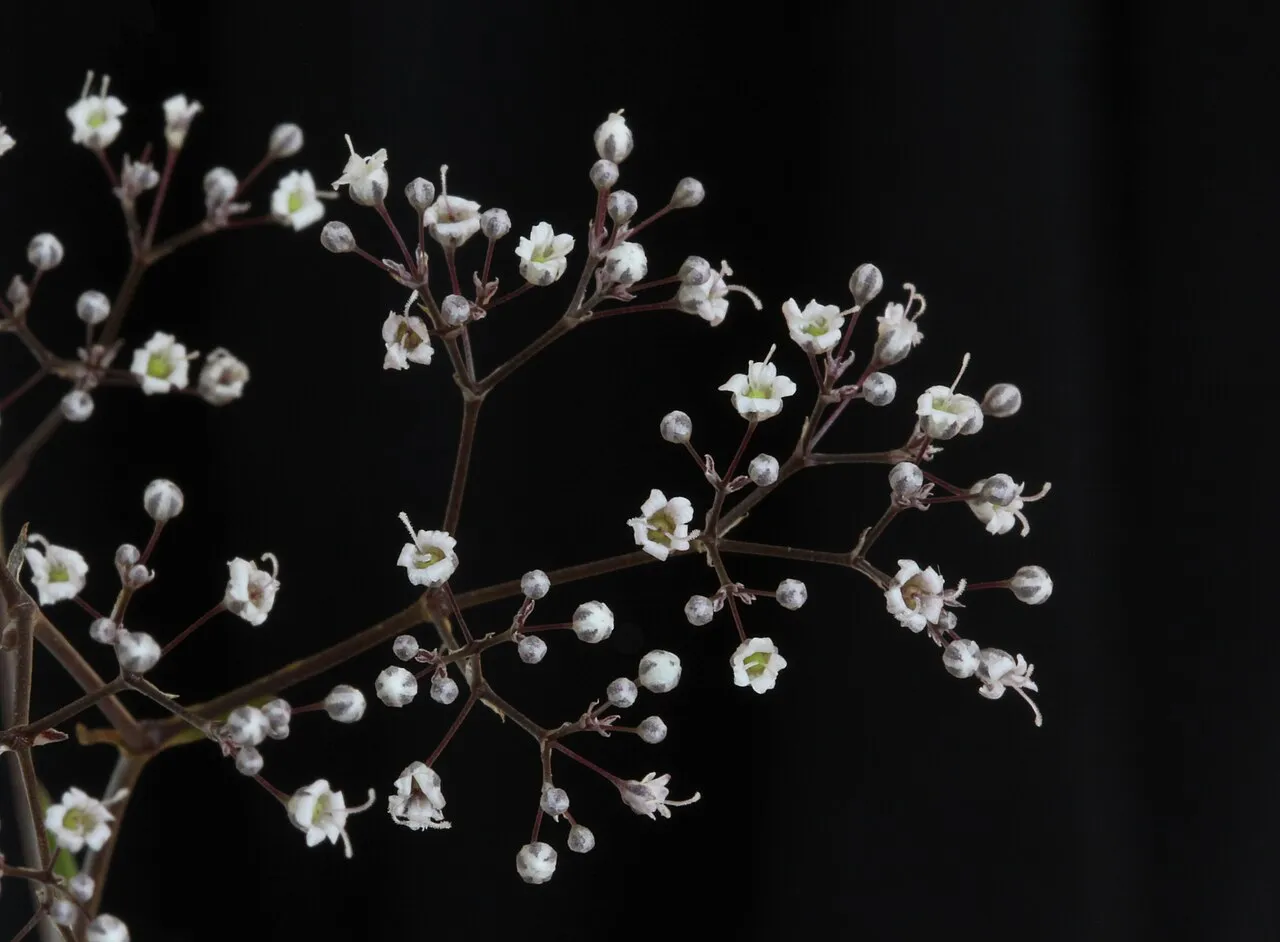
How to Grow and Care for Baby's Breath
The florist's filler is a declared noxious weed across the West and invasive around the Great Lakes. Check your state before planting, then plant it once and leave it.
The Garden Magic Hub
- Zone
- 3–9
- Light
- Full sun
- Water
- Low
- Level
- Beginner
- Season
- Summer
On this page
Baby’s breath is the most familiar cut flower in the world after the rose, and one of the more consequential things you can plant in the wrong state.
Check where you live first
NC State Extension records Gypsophila paniculata as “classed as an invasive species in places around the Great Lakes and the Chicago region and in the Pacific Northwest and California, where it is a declared noxious weed.”
The USDA PLANTS Database independently flags it as carrying invasive status listings, and records it as introduced across the lower 48.
Two sources arriving at the same conclusion separately is worth taking seriously. The mechanism is straightforward: a single mature plant produces enormous quantities of fine seed, the deep root system makes established plants very hard to remove, and it establishes readily in open sandy ground — which is why the Great Lakes dune systems are among the worst-affected habitats.
So the first question is not how to grow it, but whether you should.
- Pacific Northwest and California: it is a declared noxious weed. Do not plant it.
- Great Lakes states and the Chicago region: treat it as invasive; choose something else.
- Elsewhere: check your state’s noxious weed list before buying — these lists change — and if you do grow it, deadhead before seed sets.
There are good alternatives for the same airy filler effect. Depending on region, look at native Euphorbia corollata (flowering spurge), Thalictrum, or annual Ammi for the same cloud-of-small-white-flowers role.
If you can grow it
Hardiness: zones 3a to 9b — genuinely cold-hardy.
Size: 2 to 3 feet tall and wide, forming a mounded cloud rather than an upright clump.
Light: full sun, or partial shade with at least a few hours of direct light.
Bloom: early summer to early fall, with many small white flowers.
The soil requirement is unusual
Most garden perennials want slightly acid soil. Baby’s breath does not.
NC State gives its pH preference as alkaline (above 8.0) or neutral, on loam, silt or sandy soil. The name is a clue — Gypsophila means “gypsum-loving,” after the chalky soils it grows on in the wild.
That puts it in a small group of ornamentals genuinely happy on limey ground, alongside dianthus and carnations. If your soil is markedly acid, this is one of the rare cases where adding lime actually helps a flowering perennial.
It is highly drought tolerant once established, and prefers well-drained soil though it tolerates occasional wetness.
Plant it once
NC State notes it has large, fleshy roots and “should be left undisturbed in the garden to avoid damage.”
So site it properly the first time. Baby’s breath does not want to be divided, moved, or dug around, and an established plant resents disturbance in a way that shows up as a season of sulking or an outright loss.
It also does not need division to stay healthy — like balloon flower, it is a plant whose maintenance instruction is mostly “leave it alone.”
As a cut flower
NC State rates it good fresh and good dried, which is why florists use so much of it.
Cut when about half the flowers on a stem are open. For drying, cut at the same stage and hang the bunches upside down somewhere dark, dry and airy — the flowers hold their shape and colour well.
Cutting heavily is also, conveniently, the best way to stop it seeding.
The short version
Full sun, sharp drainage, and neutral-to-alkaline soil — one of the few perennials that genuinely likes lime. Plant it once and never move it. But check your state’s noxious weed list before you buy: across the Pacific Northwest, California and the Great Lakes, this is a plant to admire in a bouquet rather than put in the ground.
- baby's breath
- gypsophila
- invasive plants
- cut flowers
- alkaline soil