Native Grasses
How to Grow and Care for Big Bluestem
Big bluestem is a native prairie grass that reaches six to eight feet and does most of its growing in high summer. Here is how to site it and when to cut it back.
The Garden Magic Hub
- Zone
- 3–9
- Light
- Full sun
- Water
- Low
- Level
- Beginner
- Season
- Summer, Fall
On this page
Big bluestem is the grass that made the tallgrass prairie, and one of the few native plants that is genuinely imposing in a garden without being difficult.
What it is
Andropogon gerardii is native across the lower 48 and Canada, and one of the three dominant grasses of the tallgrass prairie. It is the state grass of Illinois.
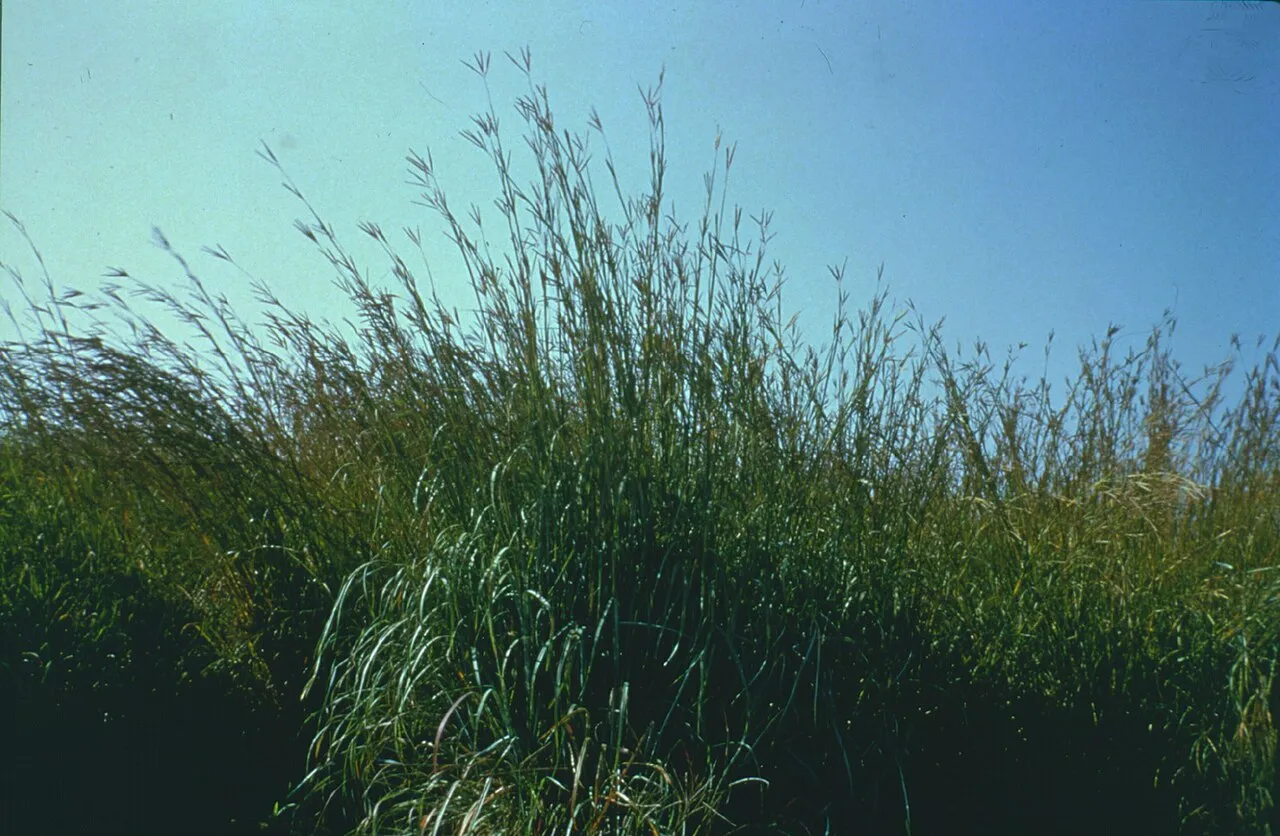
Illinois Extension puts mature height at 6 to 8 feet, with an upright clumping habit that can reach 10 feet in good conditions — and considerably shorter on dry sites.
That range matters. Big bluestem is not a plant you tuck into a border; it is a structural element, and its final height depends heavily on how much moisture and fertility it gets.
It is a warm-season grass, and that changes the calendar
This is the most useful thing to understand about it.
Big bluestem is a warm-season grass, meaning it does most of its growing and all of its flowering in the heat of summer. Cool-season grasses green up early and go dormant in July; big bluestem does the reverse.
Practically:
- Spring: slow. It emerges late and looks unpromising while everything else is romping away. This is normal, and it is the point at which impatient gardeners dig it up.
- Midsummer to autumn: rapid growth, then flowering.
- Winter: stands dormant and beige, holding its structure.
Purple flower spikes appear in August and September. The flowering head is distinctive — a three-parted branched cluster that looks like a bird’s foot, which gives the grass its other common name, turkeyfoot.
Site and soil
Full sun, and fertile, moist, well-drained soil for the best growth. Good drainage is the requirement; once established, it survives hot, dry sites comfortably.
The trade-off is worth planning around. Rich moist soil produces the tallest plants, which in an exposed garden position may flop. Leaner, drier ground produces a shorter, stiffer, more self-supporting clump. If you want the full eight feet standing upright, either give it shelter or accept some lean.
It spreads, mildly
Illinois Extension describes it as a running, warm-season grass that spreads by short rhizomes.
“Short” is the operative word — this is nothing like running bamboo. Big bluestem expands the clump gradually rather than colonising, and it is easily managed by digging back the edges every few years. In a prairie planting the spread is a feature.
Cutting back
Leave it standing through winter. The beige stems and seed heads are among the best winter structure available, they catch frost and low light, and they provide cover and seed for wildlife.
Cut back in late winter or very early spring, before new growth starts — a warm-season grass emerges late, so there is a wide window. Cut to a few inches above the crown.
Do not cut it back in autumn out of tidiness. You lose the winter interest, the wildlife value, and a degree of crown protection, and you gain nothing.
Wildlife value
As a keystone prairie grass, big bluestem supports a wide range of insects, provides nesting cover and seed for birds, and forms the structural matrix that prairie forbs grow through.
If you are building a native planting, this is one of the plants that makes it function as a habitat rather than a flower bed — the grasses hold the community together.
Companions
In a prairie-style planting, big bluestem sits well with the other tallgrass species and with tall late-season forbs — coneflowers, goldenrod, Joe Pye weed, anise hyssop. Because it comes up late, interplanting with spring bulbs works well: they finish before the grass shades them.
The short version
A six-to-eight-foot native prairie grass for full sun and well-drained soil, drought tolerant once established. Expect nothing in spring — it is a warm-season grass and grows in the heat. Purple turkey-foot seed heads in August and September, left standing through winter, cut back in late winter before growth resumes.
- big bluestem
- native grasses
- prairie
- warm season grass
- turkeyfoot